
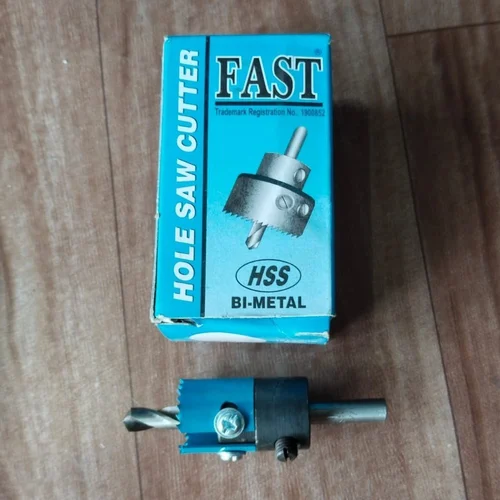
Description
“The 70mm TCT Fast Hole Saw is engineered for the professional who cannot afford downtime. While traditional bi-metal saws often overheat and dull when hitting thick stainless steel or cast iron, our Carbide-tipped system uses Triple-Edge Cutting Geometry to slice through material with 50% less physical effort.
This cutter is a ‘one-pass’ solution, leaving a mirror-smooth edge that requires zero secondary deburring. Whether you are an industrial electrician installing M70 glands in distribution boards, a plumber routing waste pipes, or a contractor installing LED downlights, this 70mm cutter delivers consistent, surgical precision in metal, wood, and PVC.”
TCT vs. Bi-Metal: The Performance Gap
Standard Bi-Metal saws are versatile but have a low melting point. In 2025, industrial materials like 316 Stainless Steel and thick alloy plates are more common than ever. Tungsten Carbide Tipped (TCT) technology allows for dry drilling at higher speeds without ruining the tool’s temper, resulting in a significantly lower “cost-per-hole.”
Battery Longevity for Cordless Professionals
A 70mm hole saw only cuts the perimeter ring (the kerf).3 Because it removes less material than a traditional solid bit, it consumes far less torque. For the modern cordless professional, this means performing 40% more holes per battery charge, keeping your crew working while others are waiting at the charging station.
Comparison & Technical Charts
Performance Comparison: 70mm Hole Saw Types
| Feature | TCT (Fast Cutter) | Bi-Metal (M42) | Diamond Grit |
| Material Strength | Stainless, Iron, Alloys | Wood, PVC, Mild Steel | Tile, Glass, Stone |
| Cutting Speed | Ultra-Fast (Seconds) | Moderate (Minutes) | Slow (Grinding) |
| Durability | 500+ Holes | 100-150 Holes | High (Brittle materials) |
| Finish Quality | Precision / Mirror | Standard / Rougher | Clean (Chip-free) |
| Max Depth | Up to 25mm Plate | Up to 38mm Depth | Surface only |
Recommended RPM Chart (70mm Cutter)
For a large 70mm circumference, the outer teeth travel fast. Maintain low RPM to prevent carbide chipping.
| Material | Recommended RPM | Coolant Required? |
| Stainless Steel (316) | 120 – 180 RPM | Yes (Cutting Oil) |
| Mild Steel Plate | 250 – 400 RPM | Recommended |
| Cast Iron | 150 – 250 RPM | No (Dry) |
| Aluminum | 500 – 700 RPM | Optional |
| Hardwood / PVC | 800 – 1000 RPM | No |


Reviews
There are no reviews yet.