

Description
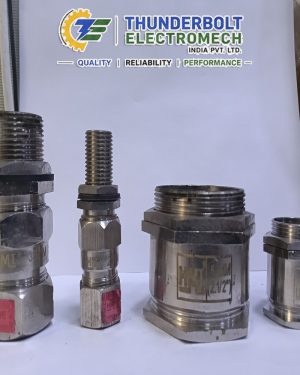
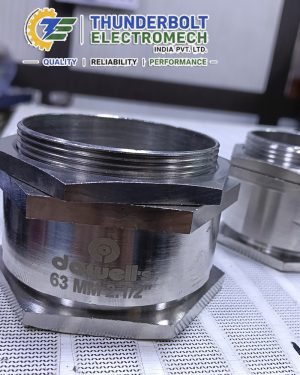
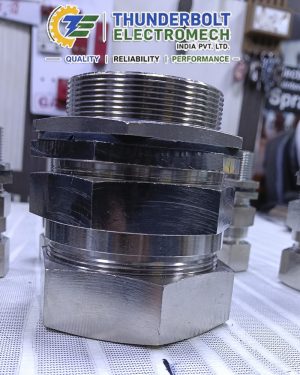
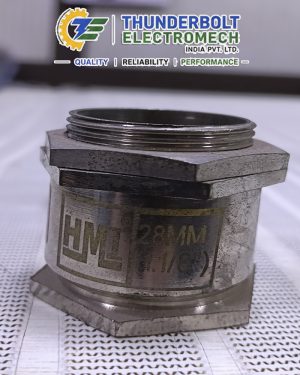
Comet Single Compression Brass Cable Gland Size 57mm (2-1/4”)
The Comet Single Compression Brass Cable Gland Size 57mm (2-1/4”) is intended for electrical cable-entry applications where a specific 57mm single compression brass cable gland is required.
The product’s two size references — 57mm and 2-1/4 inch — make it easier for electrical contractors, panel builders, maintenance teams and purchase departments to identify the required item when project documents use different measurement systems.
A cable gland is installed where a cable enters an electrical enclosure, panel, equipment or other cable-entry point. The gland provides a controlled mechanical connection around the cable and helps maintain the intended cable-entry arrangement.
For this reason, do not select a cable gland only because its nominal size appears to match the cable specification.
The cable’s actual outer diameter (OD) is a key selection parameter. Thunderbolt’s cable gland sizing guide explains that the sealing system must be matched to the actual cable diameter rather than relying only on conductor size in sq.mm. Cable construction, insulation, armour, sheath and manufacturer can change the finished cable diameter even when two cables have the same conductor cross-section.
Read: What Size Cable Gland Do I Need for My Project?
Key Product Identification
| Specification | Details |
| Brand | Comet* |
| Product Type | Single Compression Brass Cable Gland |
| Gland Size | 57mm |
| Inch Equivalent | 2-1/4” |
| Material | Brass* |
| Gland Type | Single Compression |
| Application | Cable Entry / Cable Termination |
| Product Category | Cable Gland |
| Supplier | Thunderbolt Electromech India Pvt. Ltd. |
*Verify the final brand, material grade, finish, thread standard and other technical specifications against the current manufacturer documentation before publishing them as certified specifications.
Why Cable Gland Size Must Be Checked Before Ordering
One of the most common mistakes in cable gland purchasing is selecting the gland according to the conductor’s sq.mm rating alone.
That is not enough.
The gland interacts with the outside of the finished cable, so the cable’s outer diameter and the manufacturer’s specified gland acceptance range need to be checked.
For example, two cables with the same nominal conductor area can have different outside dimensions because of differences in insulation, sheath and construction. Thunderbolt’s technical guide therefore recommends checking the manufacturer’s cable datasheet or measuring the cable OD before choosing the gland.
This matters even more when purchasing a larger gland such as the 57mm (2-1/4”) size. The nominal gland size should be treated as an identification specification, not as proof that every cable of a particular conductor size will fit.
Before purchasing, confirm:
- Actual cable outer diameter
- Cable construction
- Single or double compression requirement
- Armoured or unarmoured cable
- Required thread type
- Enclosure entry size
- Environmental conditions
- Required IP protection
- Manufacturer’s applicable technical specification
If you are uncertain about the correct size, send the cable OD, cable type and required quantity to the supplier before placing the order.
Single Compression Cable Gland: Where Does It Fit?
A single compression cable gland uses compression around the cable’s outer sheath. It is different from a double compression gland, which has a separate mechanism for gripping/sealing the cable and armour arrangement.
Thunderbolt’s technical material distinguishes the two based on cable construction, sealing arrangement and application.
This means you should not automatically replace a specified double compression gland with a single compression gland simply because the nominal size is the same.
The gland type must match the cable and installation requirement.
For a deeper explanation:
Read: Armoured vs Unarmoured Cable Glands – Which One Do You Actually Need?
Where Can a 57mm Cable Gland Be Used?
The exact application depends on the cable, gland specification and installation environment. A 57mm single compression brass cable gland can be considered where a project specifically calls for this gland type and size.
Potential cable-entry applications include:
- Electrical panels
- Industrial equipment
- Control equipment
- Power distribution equipment
- Electrical enclosures
- Industrial cable-entry systems
- Machinery
- Infrastructure projects
- Maintenance and replacement work
The important point is specification matching. A 57mm gland should not be selected merely because the project involves a large cable.
The cable OD, enclosure entry, thread and gland design still have to agree.
How to Select the Correct Cable Gland
Use this simple purchasing process.
Step 1 — Identify the cable
Check the cable manufacturer’s datasheet.
Record:
Cable type → conductor size → construction → outer diameter
Step 2 — Measure the cable OD
If the datasheet does not provide the required dimension, measure the outside diameter with a suitable measuring instrument.
Step 3 — Identify the gland type
Determine whether the installation requires:
- Single compression
- Double compression
- Armoured gland
- Unarmoured gland
- Weatherproof gland
- Flameproof/hazardous-area gland
Do not choose the gland type from size alone.
Step 4 — Check the thread
The gland has to match the enclosure entry and specified thread system.
Step 5 — Check environmental requirements
For outdoor or exposed installations, verify the required ingress protection and environmental specification.
Thunderbolt’s IP-rating guide explains why the gland’s sealing performance and the enclosure’s protection requirements need to be considered together.
Read: What Is IP Rating on Cable Glands and Why Does It Matter?
Step 6 — Confirm before ordering
Give the supplier:
Brand + gland type + nominal size + cable OD + cable construction + quantity
This reduces the chance of receiving the wrong gland.
Common Customer Problems and Solutions
| Customer problem | Likely issue | Better solution |
| Gland does not fit the cable | Cable OD was not checked | Measure actual cable OD |
| Cable is loose inside gland | Cable is outside the gland’s specified sealing range | Match cable OD to manufacturer’s range |
| Gland cannot enter the panel | Thread/entry specification is different | Verify enclosure entry and thread |
| Wrong gland supplied | Order was based only on cable sq.mm | Provide complete cable details |
| Installer asks whether single or double compression is needed | Cable construction wasn’t identified | Confirm armoured/unarmoured construction |
| Outdoor installation has sealing concerns | Environmental/IP requirement wasn’t considered | Select a gland according to the required protection |
This is why a product page should not simply say “57mm cable gland.” The buyer needs enough technical context to avoid ordering the wrong component.
Why Choose Thunderbolt Electromech India Pvt. Ltd.?
Thunderbolt Electromech India Pvt. Ltd. supplies cable glands and electrical accessories for industrial buyers, electrical contractors, panel builders, OEMs, EPC companies and project requirements across India.
The company’s Cable Gland range includes products from Comet, Dowells, HMI and other ranges, with both single- and double-compression options available across multiple sizes.
The bigger advantage for a buyer is product identification.
Instead of simply asking for a “large cable gland,” you can provide the brand, gland type, size, cable OD and quantity. That gives the purchasing team a much clearer specification to work with.
Thunderbolt is based in Chandni Chowk, Delhi, and provides cable-gland supply for customers beyond Delhi as well. The company’s published contact details are: Shop No. 3538, Sitaram Bazar Road, Bazar Sirkiwalan, Chawri Bazar, Chandni Chowk, Delhi – 110006; +91-9911886655; info@thunderboltelectromech.com.
For larger project enquiries, send the required sizes and quantities together rather than ordering each gland separately.
Related Cable Gland Guides
These links should be part of the product-page internal-link structure.
1. Main commercial guide
Cable Gland Supplier India: 15 Expert Tips to Choose the Right Cable Gland
Recommended anchor: Cable Gland Supplier India
2. Size-selection cluster
What Size Cable Gland Do I Need for My Project?
Recommended anchor: cable gland size selection guide
3. IP-rating cluster
What Is IP Rating on Cable Glands and Why Does It Matter?
Recommended anchor: IP rating on cable glands
4. Armoured/unarmoured cluster
Armoured vs Unarmoured Cable Glands
Recommended anchor: armoured vs unarmoured cable glands
This is preferable to putting five exact-match links to the same pillar throughout the product description.
Frequently Asked Questions
I checked current search-oriented cable-gland discussions and Reddit questions. The recurring concerns are sizing, cable diameter, gland compatibility, sealing and installation.
1. What cable size is suitable for a 57mm cable gland?
Do not determine suitability from conductor size alone. A 57mm (2-1/4”) gland should be matched to the cable’s actual outer diameter and the manufacturer’s specified cable acceptance range. Check the cable datasheet before ordering.
2. What does 57mm mean on a cable gland?
57mm is the nominal size used to identify this particular gland in the product range, while 2-1/4” provides the corresponding inch designation. The nominal size should not be interpreted as the exact cable diameter that the gland will accept.
3. Is a single compression cable gland suitable for every cable?
No. Gland selection depends on cable construction, installation conditions, sealing requirements and the specified gland design. Armoured cables and demanding outdoor installations may require a different gland configuration.
4. How do I know whether I need a single or double compression cable gland?
First identify whether the cable is armoured or unarmoured and then check the project specification. Double compression glands provide separate sealing/gripping functions and are commonly selected for armoured cable applications, while single compression glands are used for suitable cable-entry applications where their design meets the requirement.
5. Should I choose a cable gland according to cable sq.mm?
No. Not by itself. Cable sq.mm identifies the conductor cross-sectional area. Cable gland selection also requires the completed cable’s outer diameter and construction. Thunderbolt’s sizing guide specifically recommends checking the actual OD.
6. Can Thunderbolt help me select the correct cable gland?
Yes. When contacting Thunderbolt, provide the cable OD, cable construction, gland type, required size, thread requirement and quantity. This gives the team the information needed to identify the appropriate product more accurately.

Reviews
There are no reviews yet.