
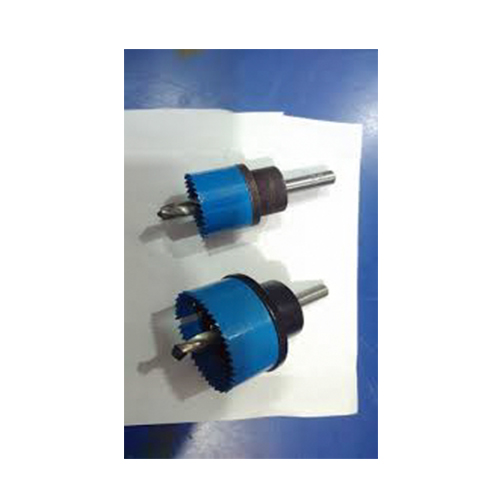
Description
“The 75mm Pro-Series TCT Fast Hole Saw is the definitive 2025 solution for large-diameter drilling. While traditional bi-metal saws often overheat and seize when cutting through thick metal or abrasive composites, our Carbide-tipped system uses Triple-Edge Cutting Geometry to maintain a cool, sharp edge.
This cutter is a ‘one-pass’ tool, delivering a mirror-smooth finish that requires zero secondary deburring. Whether you are an electrician installing commercial downlights, a plumber routing waste water lines, or a fabricator working on heavy plate steel, the 75mm Fast Cutter delivers surgical precision. Fully compatible with handheld cordless drills, bench presses, and magnetic drill units.”
TCT vs. Bi-Metal: The Performance Shift
Historically, installers used Bi-Metal saws for general tasks. However, 2025 trends show a massive move toward TCT (Tungsten Carbide Tipped) cutters. TCT maintains its hardness at speeds where bi-metal would literally melt. For a large 75mm circumference, where friction is high, TCT is the only choice that ensures a lower “cost-per-hole” across high-volume projects.
Battery Longevity in the Cordless Era
Drilling a 75mm hole removes significant material.1 The Fast Hole Saw approach only cuts the perimeter ring (the kerf).2 This consumes roughly 40-50% less torque than traditional drilling methods. For the modern cordless professional, this means performing significantly more holes per battery charge, keeping the workflow continuous.
Comparison & Technical Charts
Performance Comparison: 75mm Hole Saw Types
| Feature | TCT (Fast Cutter) | Bi-Metal (M42) | HSS Standard |
| Best Material | Stainless Steel, Iron, Alloys | Wood, PVC, Thin Steel | Plastic, Soft Wood |
| Cutting Speed | Ultra-Fast (3x Faster) | Moderate | Slow |
| Heat Resistance | Superior ($1000^\circ\text{C}$) | High ($600^\circ\text{C}$) | Moderate |
| Finish Quality | Mirror / Burr-Free | Standard | Rough |
| Durability | 500+ Holes | 100-150 Holes | 30-50 Holes |
Recommended RPM Chart (75mm Cutter)
Maintaining the correct RPM is critical to prevent carbide chipping.3
| Material | Recommended RPM | Coolant Required? |
| Stainless Steel (304/316) | 120 – 180 RPM | Yes (Cutting Oil) |
| Mild Steel Plate | 250 – 400 RPM | Recommended |
| Cast Iron | 150 – 250 RPM | No (Dry) |
| Aluminum | 450 – 600 RPM | Optional |
| Hardwood / PVC | 800 – 1000 RPM | No |


Reviews
There are no reviews yet.