
Description
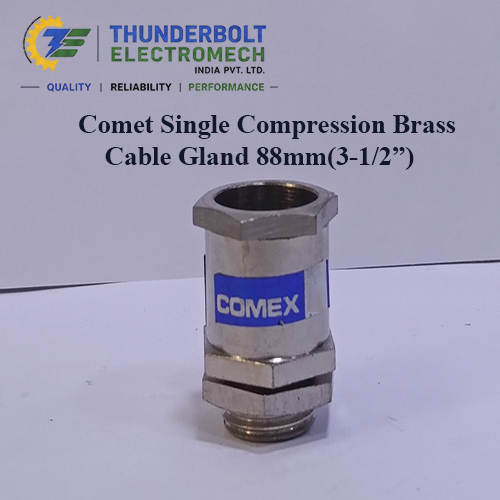
Comet Single Compression Brass Cable Gland 88mm (3-1/2”)
The Comet Single Compression Brass Cable Gland 88mm (3-1/2”) is a robust cable-entry component designed to provide secure cable retention, mechanical support, strain relief, and sealing for compatible electrical and industrial installations. Its brass construction makes it suitable for a wide range of electrical applications where a durable metallic cable-entry solution is required.
This Comet Single Compression Brass Cable Gland can be considered for electrical panels, junction boxes, control cabinets, industrial machinery, electrical enclosures, automation systems, OEM equipment, and other applications requiring reliable cable entry.
Selecting the correct cable gland requires more than simply matching the nominal gland size. The cable’s actual outside diameter (OD), construction, gland clamping range, thread specification, installation environment, and required protection level should all be checked before purchasing.
For a comprehensive explanation of cable gland selection, sizing, materials, threads, applications, and installation considerations, read Cable Gland Supplier India: 15 Expert Tips to Choose the Right Cable Gland for Industrial Projects – 2026 Guide. This detailed resource can help electrical engineers, contractors, panel builders, procurement teams, and industrial buyers make more informed cable-gland selections.
Key Features
- Brand: Comet
- Product Type: Single Compression Brass Cable Gland
- Size: 88mm (3-1/2”)
- Material: Brass
- Designed for compatible electrical cable-entry applications
- Provides mechanical cable retention and strain relief
- Robust metallic construction
- Suitable for compatible panels, enclosures, machinery, and industrial equipment
- Cable OD and thread compatibility should be verified before purchase
Understanding the 88mm (3-1/2”) Cable Gland Size
The 88mm (3-1/2”) designation should not automatically be interpreted as the diameter of the cable that the gland will accept.
Cable glands have specific cable acceptance or clamping ranges. The actual outside diameter of the complete cable should be compared with the manufacturer’s specified range before ordering.
Cable conductor size, normally expressed in sq.mm, is also different from cable outer diameter. Two cables with the same conductor cross-sectional area may have different overall diameters because of differences in insulation, number of cores, bedding, armour, and outer sheath construction.
Therefore, before purchasing the Comet 88mm (3-1/2”) cable gland, verify the actual cable OD using the cable manufacturer’s datasheet or an appropriate measuring instrument.
For additional information about choosing the correct gland based on cable dimensions, read What Size Cable Gland Do I Need for My Project?.
Cable Gland Size and Thread Size Are Different
Another important consideration is the difference between the cable clamping range and the mounting thread.
The clamping range determines whether the gland can properly grip and seal the cable. The mounting thread determines how the gland connects to the electrical enclosure, panel, junction box, or equipment.
Metric, PG, NPT, and other thread standards have different dimensions and should not be assumed to be interchangeable.
Before ordering, confirm:
- Cable outer diameter
- Cable clamping range
- Cable construction
- Gland type
- Enclosure entry
- Thread standard
- Thread size
- Environmental conditions
- Required sealing or IP protection
These factors are covered in greater detail in Cable Gland Supplier India: 15 Expert Tips to Choose the Right Cable Gland for Industrial Projects – 2026 Guide.
How to Select the Correct 88mm Cable Gland
1. Measure the Cable Outer Diameter
Measure the complete outside diameter of the cable at the point where the gland will grip and seal it. Where available, the cable manufacturer’s technical datasheet should be used as the primary dimensional reference.
2. Compare Cable OD With the Gland Range
The measured cable OD should fall within the specified clamping range of the Comet gland. A cable that is too small may not be adequately compressed, while an oversized cable may prevent proper installation or sealing.
3. Check Cable Construction
Identify the cable construction before selecting the gland. Determine whether the cable is armoured or unarmoured and whether the application requires a single-compression or another gland design.
4. Verify the Enclosure Thread
Check the thread required by the electrical panel, enclosure, junction box, or equipment. The gland’s thread must be compatible with the enclosure entry.
5. Consider the Installation Environment
Consider whether the gland will be used indoors or outdoors and whether it will be exposed to moisture, dust, vibration, chemicals, temperature variation, or mechanical stress.
6. Check Protection Requirements
Where ingress protection is required, consider the gland, cable, enclosure entry, sealing arrangement, and installation procedure together. The stated IP rating of an individual gland does not automatically guarantee the same rating for the completed installation.
For more information, read What Is IP Rating on Cable Glands and Why Does It Matter?.
Applications
The Comet Single Compression Brass Cable Gland 88mm (3-1/2”) can be considered for compatible cable-entry requirements in various electrical and industrial installations.
Typical applications include:
- Electrical control panels
- Power distribution panels
- Junction boxes
- Industrial control cabinets
- Electrical enclosures
- Industrial machinery
- Automation systems
- Manufacturing equipment
- OEM equipment
- Infrastructure projects
- Electrical installation projects
- Industrial maintenance applications
- Panel-building projects
The suitability of the product should be confirmed against the cable OD, cable construction, gland clamping range, thread specification, environmental conditions, and applicable project requirements.
For more cable-gland information, visit the Cable Gland guides and articles from Thunderbolt Electromech India Pvt. Ltd.
Why Choose Thunderbolt Electromech India Pvt. Ltd. for Cable Glands?
Thunderbolt Electromech India Pvt. Ltd. supplies cable glands and related electrical products for industrial, commercial, infrastructure, OEM, panel-building, engineering, and maintenance applications.
Choosing the right cable gland requires consideration of several technical parameters rather than simply selecting a nominal size. Cable OD, cable construction, gland type, material, thread, sealing range, environmental conditions, and protection requirements can all affect product suitability.
Thunderbolt Electromech can assist customers in understanding these requirements before procurement. This is particularly useful for:
- Electrical contractors
- Panel manufacturers
- EPC contractors
- OEMs
- Electrical engineers
- Project procurement teams
- Industrial maintenance departments
- Industrial buyers
Customers can also explore the Cable Gland guides and articles to find additional information related to cable gland selection, sizing, installation, applications, and technical considerations.
For a complete selection framework, Cable Gland Supplier India: 15 Expert Tips to Choose the Right Cable Gland for Industrial Projects – 2026 Guide provides additional guidance for industrial cable-gland requirements.
Common Cable Gland Selection Mistakes
Choosing a gland only by conductor size
Cable conductor size in sq.mm does not provide the complete cable OD. Always verify the external diameter.
Ignoring the clamping range
The cable should fall within the manufacturer’s specified gland range. Nominal size alone is insufficient.
Confusing thread size with cable size
The mounting thread and cable clamping range are separate specifications.
Using an incompatible thread
Metric, PG, NPT, and other thread standards should not be mixed without confirming compatibility.
Ignoring the installation environment
Outdoor, wet, dusty, corrosive, or high-vibration applications may require different cable-entry considerations.
Assuming an IP rating applies automatically to the complete installation
The gland, cable, enclosure, sealing arrangement, and installation method all contribute to the performance of the completed cable entry.
Frequently Asked Questions
1. What cable diameter does an 88mm cable gland fit?
The 88mm (3-1/2”) designation alone does not establish the cable diameter range. The actual cable OD must be compared with the specific Comet gland’s stated clamping range. Always verify the manufacturer’s technical specifications before ordering.
2. How do I choose the correct cable gland size?
First measure the complete cable outer diameter. Then compare it with the gland’s specified clamping range. Also check cable construction, gland type, thread, environmental conditions, and required protection level.
3. Is an 88mm cable gland suitable for an 88mm diameter cable?
Not necessarily. The nominal 88mm designation does not automatically mean that the gland accepts an 88mm-diameter cable. Always check the actual cable acceptance range specified for the particular gland.
4. Is cable gland size the same as cable size in sq.mm?
No. Cable size in sq.mm generally describes the conductor cross-sectional area, while gland selection depends heavily on the complete cable’s outside diameter. These are different measurements.
5. What is the difference between cable gland size and thread size?
The cable clamping range relates to the cable’s outside diameter, while the mounting thread relates to the enclosure or equipment entry. Both specifications need to be checked separately.
6. Can a brass cable gland be used outdoors?
A brass cable gland may be suitable for outdoor use when the specific gland construction, sealing system, cable compatibility, environmental conditions, and required protection level meet the application requirements. Brass material alone does not guarantee a particular outdoor IP rating.
7. Can a single-compression gland be used with an armoured cable?
This depends on the cable construction and the gland design. A single-compression gland should not automatically be selected for an armoured cable. Where armour clamping and associated mechanical or electrical requirements apply, an appropriate gland designed for that cable construction should be selected.
8. Does an IP-rated cable gland guarantee the enclosure’s IP rating?
No. The IP rating of the individual gland does not automatically establish the IP rating of the complete installation. The cable, gland, enclosure entry, sealing arrangement, thread, and installation method must all be suitable.
9. What happens if the cable is too small for the gland?
If the cable is below the gland’s specified minimum clamping diameter, the compression seal may not grip adequately. This can reduce cable retention and compromise the intended sealing performance.
10. What information should I provide when ordering an 88mm cable gland?
For accurate selection, provide the complete cable OD, cable construction, required gland type, enclosure/thread specification, installation environment, and required protection level. Providing the cable manufacturer’s datasheet is also helpful.
Related Cable Gland Resources
For customers researching cable-gland selection, Thunderbolt Electromech India Pvt. Ltd. provides several useful resources:
- Cable Gland Supplier India: 15 Expert Tips to Choose the Right Cable Gland for Industrial Projects – 2026 Guide — comprehensive guidance for selecting cable glands for industrial projects.
- What Size Cable Gland Do I Need for My Project? — useful when determining gland size from cable dimensions.
- What Is IP Rating on Cable Glands and Why Does It Matter? — explains ingress protection considerations.
- Cable Gland guides and articles — browse the complete collection of cable-gland resources.

Reviews
There are no reviews yet.