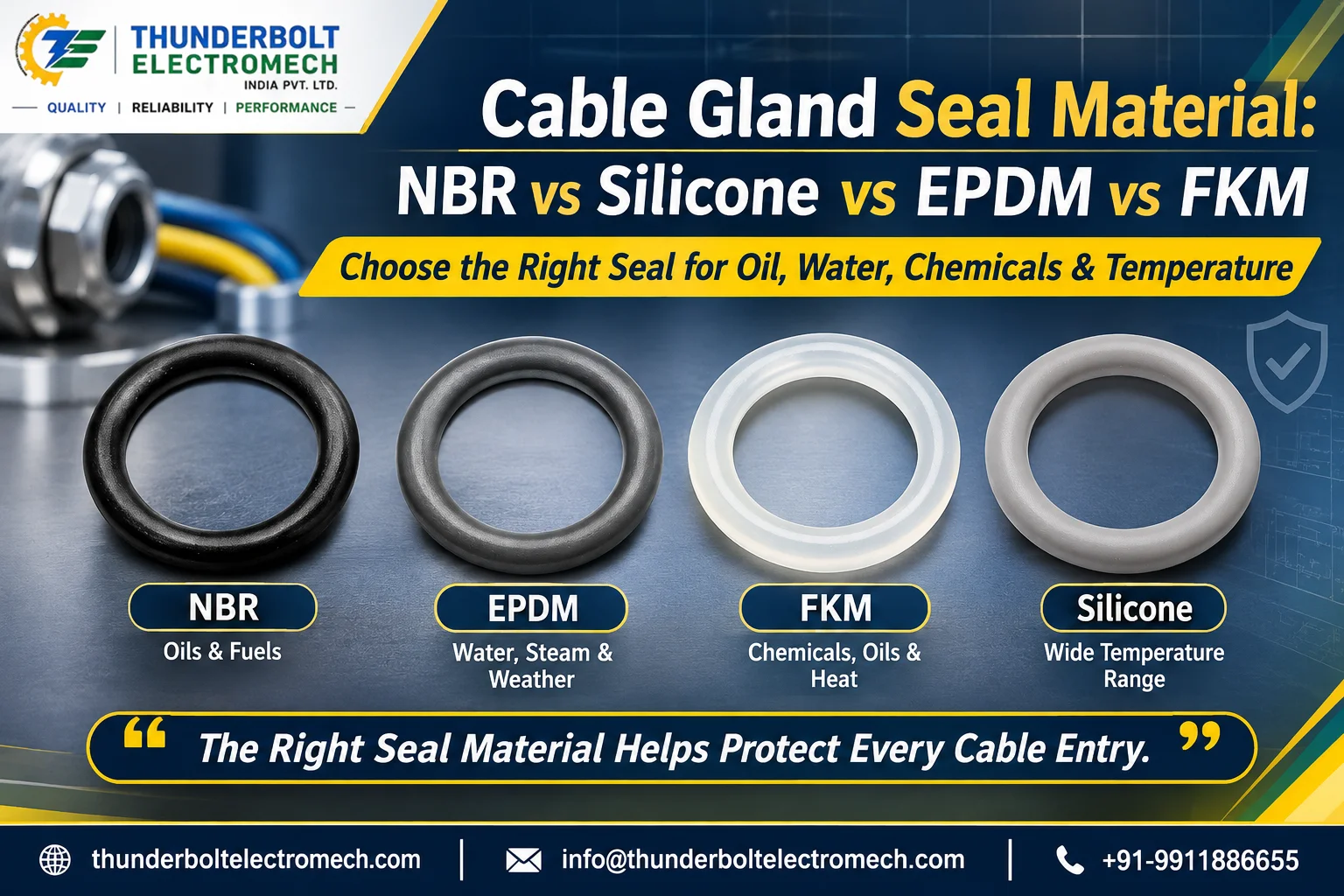
Cable Gland Seal Material: NBR vs Silicone vs EPDM vs FKM
Quick Answer: Match the elastomer to the exposure. Choose NBR where oil touches the gland, EPDM for weather, ozone and…

Quick Answer: Match the elastomer to the exposure. Choose NBR where oil touches the gland, EPDM for weather, ozone and…

Quick Answer: Cable gland thread types fall into four families: metric (60°, 1.5 mm pitch, parallel), PG (80° flank, legacy…
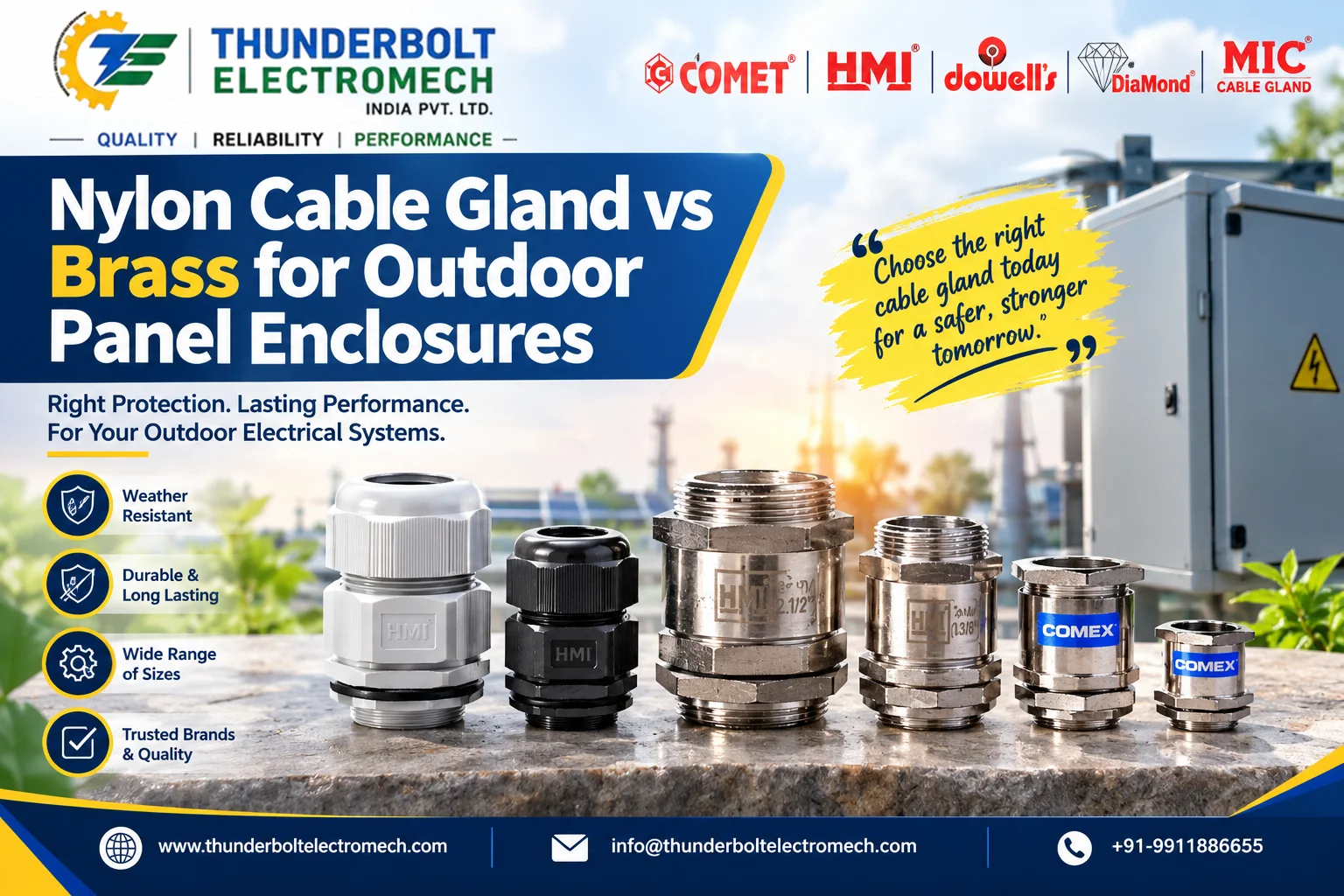
Quick Answer: Choose a UV resistant nylon cable gland (black, UV-stabilised polyamide) for light outdoor panels, provided the gland body…

Quick Answer: An EMC cable gland for VFD cables bonds the cable’s shield to the enclosure around its full circumference,…
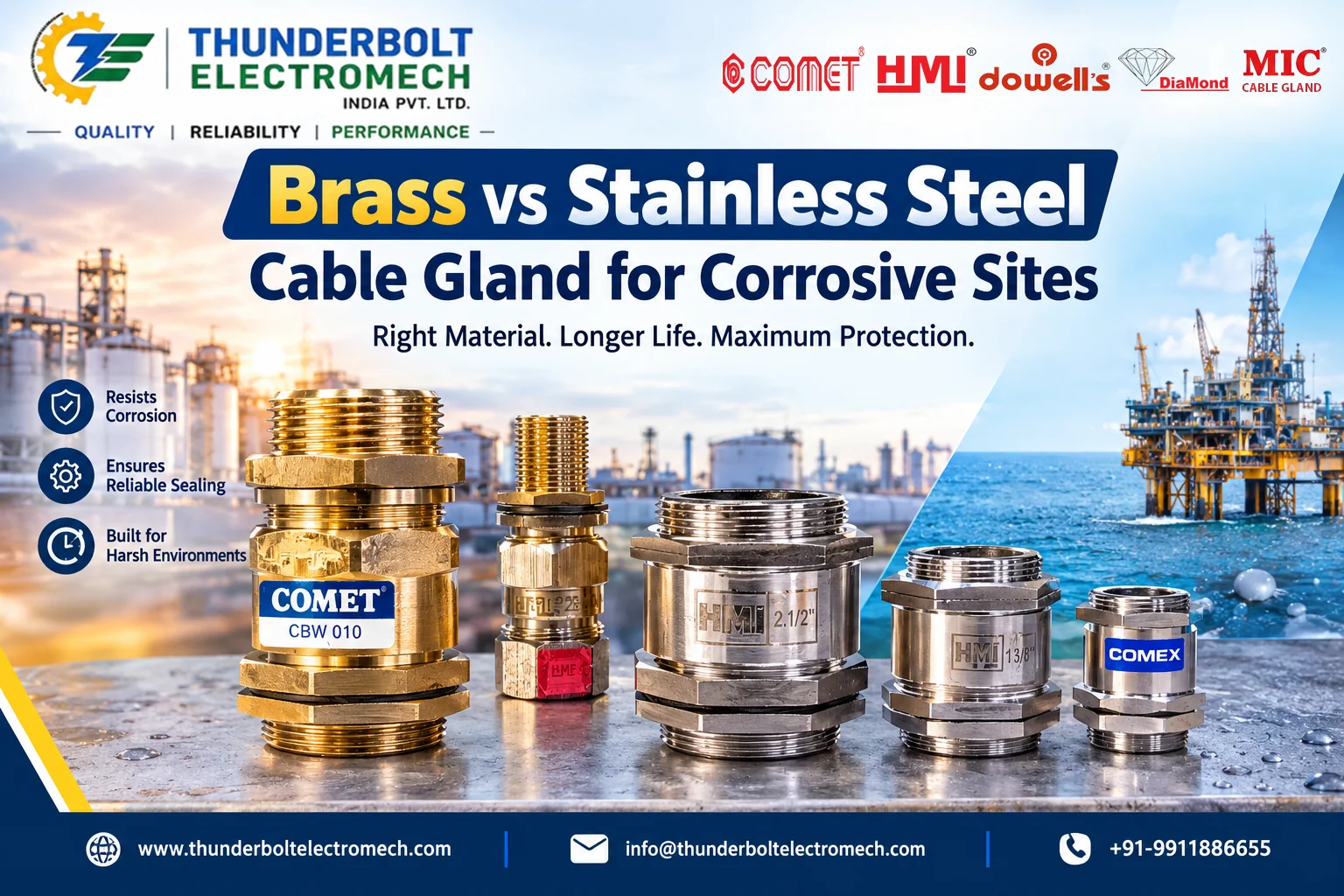
Quick Answer: Use nickel-plated brass for dry and general industrial duty. Move to SS 316 wherever chlorides, acids, ammonia or…

Quick Answer: A cable gland has no printed expiry date, but its parts age at different speeds. The brass or…

Quick Answer: Cable glands for solar and renewable energy projects need to match the specific demands of IS 17293-compliant DC…
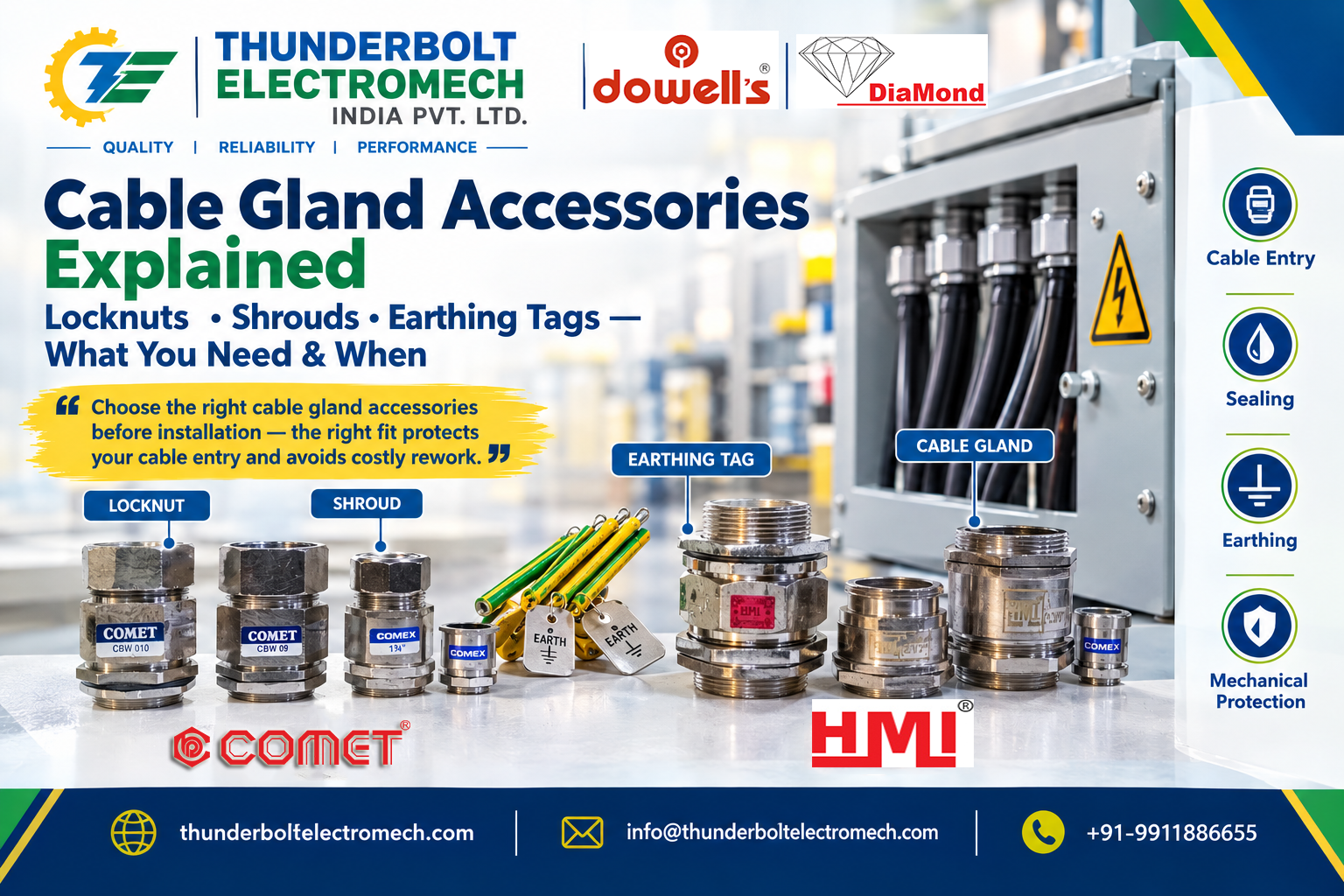
Quick Answer: Locknuts, shrouds, and earthing tags are the three accessories that turn a cable gland into a complete, code-compliant…

Quick Answer:Choose nickel-plated brass for general indoor/outdoor panels needing earthing continuity and EMI shielding at moderate cost. Choose nylon (PA66)…

Quick Answer: Most cable gland failures aren’t from loose installation — they’re from installers “playing it safe” with an extra…